
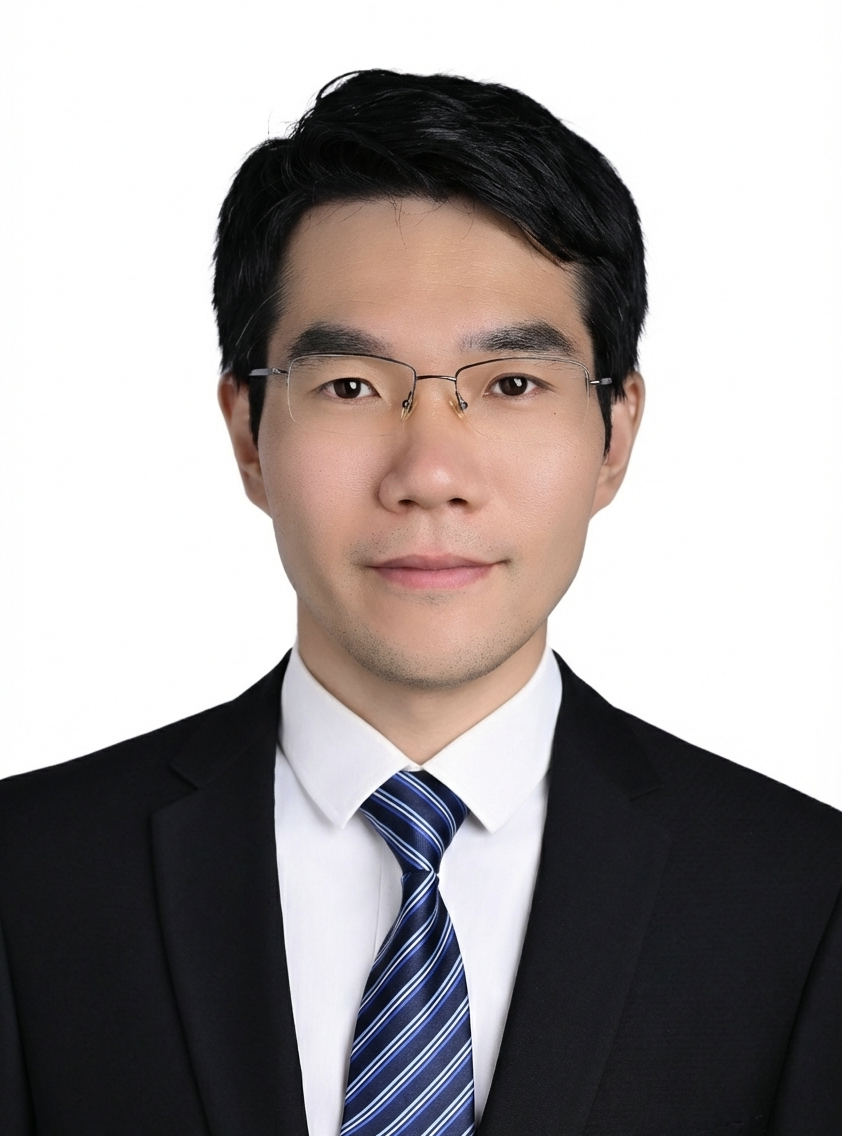
Han YUAN, Professor
Harbin Institute of Technology, Shenzhen, China
Biography: Dr. Han YUAN, professor and PhD Supervisor at Harbin Institute of Technology, Shenzhen, Guangdong "Pearl River Scholar". He was a visiting scholar at the Soft Robotics Laboratory, University of Bristol, UK. His research focuses on cable-driven flexible robotics. He has led 7 national-level research projects, published over 70 academic papers, and been granted more than 40 national invention patents.
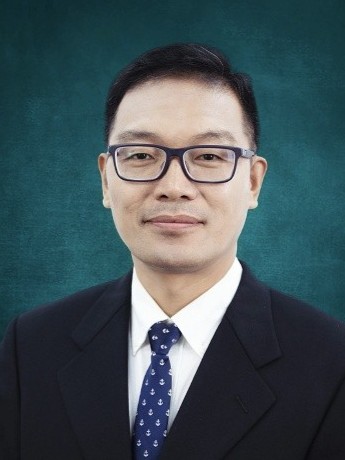
Hejun Wu, Professor
Sun Yat-sen University, China
Biography: Hejun Wu, Professor, PhD Supervisor, School of Computer Science and Engineering, Sun Yat-sen University. Deputy Director, Guangdong Key Laboratory of Big Data Secretary-General, Working Committee, New Engineering Alliance of the Ministry of Education Senior Member, China Computer Federation (CCF) Chairman, Emergency Medicine Branch, Guangdong Medical Association. Professor Hejun Wu received his PhD degree from the Hong Kong University of Science and Technology in 2008. His current research interests include embodied AI, and cross-disciplinary applications of artificial intelligence in healthcare and transportation. He has undertaken four national-level projects and numerous provincial and municipal science and technology programs. He has published more than 60 academic papers in international journals and conferences, three of which have won Best Paper Awards. He also holds more than 20 authorized invention patents. In 2023, Professor Wu was honored as an "Outstanding Teacher in Computer Science among National Higher Education Institutions."
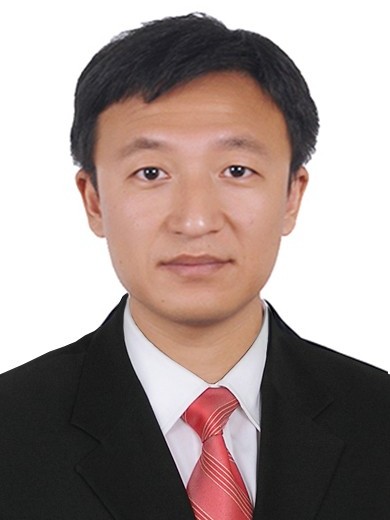
Cunman Liang, Associate Professor
Tianjin University, China
Biography: Dr. Cunman Liang is an Associate professor at the School of Mechanical Engineering, Tianjin University, Deputy Director of the International Joint Research Center for Micro/Nano Manufacturing Technology and Equipment, and a recipient of the Young Talent Recruitment Program launched by the Ministry of Education of China. He earned his Bachelor’s, Master’s and Doctoral degrees in Mechanical Engineering from Tianjin University in 2012, 2015 and 2020 respectively. From 2017 to 2018, he completed joint doctoral training at Northwestern University in the United States under the guidance of Professor John A. Rogers. From 2020 to 2023, he carried out postdoctoral research at The Chinese University of Hong Kong and the Hong Kong Centre for Cardio-Cerebrovascular Health Engineering (COCHE). Dr. Liang has presided over a number of research projects, including programs funded by the National Natural Science Foundation of China, the Overseas Talent Recruitment Special Project of the Ministry of Education and open projects of State Key Laboratories. He has published over 50 academic papers in journals such as Science Robotics and Nature Communications, alongside 2 book chapters. His work has accumulated more than 3,000 citations on Google Scholar with an H-index of 25. He also owns over 10 authorized national patents and has filed 2 U.S. patents. He has received numerous academic accolades, including the 2016 IEEE 3M-NANO Best Student Paper Award, the 2024 IEEE 3M-NANO Best Conference Paper Nomination, the Excellent Youth Editorial Board Member Award of SmartBot and the 2024 Pioneer Award from the School of Mechanical Engineering, Tianjin University. Currently serving as a Youth Editorial Board Member of four journals, including Soft Science and SmartBot, he was invited to deliver a keynote speech at the 2023 Annual Conference of the Chinese Society of Micro-Nano Technology. His research mainly concentrates on micro/nano robotics and micro/nano sensing technologies, and his outstanding research outcomes have been featured by more than ten mainstream media platforms including Sina, Sohu, China Science and Technology Network.
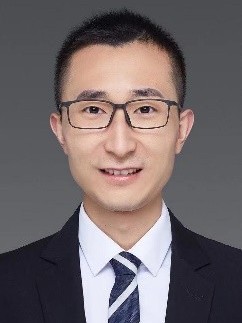
Heng Wang, Associate Professor
South China University of Technology, China
Biography: Dr. Heng Wang is an Associate Professor with the Shien-Ming Wu School of Intelligent Engineering, South China University of Technology, Guangzhou, China, and the director of SCUT-Shanghai Huayi Tech joint Medical Virtual Reality Lab. He received the bachelor’s degree from Xi’an Jiaotong University, China, in 2016 and received the Ph.D. degree in Mechanical Engineering from University of Minnesota, Twin Cities, USA, in 2021. His research interests include magnetic motion tracking for surgical robot navigation and embodied intelligence training, magnetically actuated capsule robots and continuum robots, medical robotics, and medical VR/AR and human-machine interaction. Dr. Wang is a principal investigator of multiple research projects including NSFC project, Guangdong and Guangzhou science and technology projects, and numerous industry-funded projects. Dr. Wang was granted a US patent and three China patents, and published more than 20 research papers in renowned journals and conferences such as Nature Communications/TRO/TMECH/TIM/MSSP/RAL/ACC, etc. He received the Doctoral Dissertation Fellowship from University of Minnesota in 2020, the honor of Editor’s Highlight paper (Best 50 papers) in “Applied Physics and Mathematics” in Nature Communications, ASME Best Mechatronics Paper Award in 2020, Best Application Paper Award in the 2022 IEEE International Conference on Digital Twins and Parallel Intelligence.
Speech Title: Versatile Magnetic Navigation Systems for Precise Medical Robotics
Abstract: Miniature medical robots, e.g., capsule robots and transluminal flexible robots, have been increasingly developed in recent years for minimally invasive medicine due to their small size and easy access to narrow lumens. However, there exists significant technical challenges in precise navigation and dexterous actuation of such miniature robots through tortuous and complicated intracorporeal lumens such as gastrointestinal tracts, bronchi, and blood vessels. Magnetic navigation systems are advantageous for intracorporeal medical robots because the magnetic field can permeate the human body safely and achieve remote sensing and actuation. In this talk, diverse magnetic sensing and actuation systems will be discussed for wireless, autonomous, and precise navigation of miniature medical robots in minimally invasive medicine. First, magnetic pose tracking systems with novel magnetic materials, configurations of magnetic sources, estimation algorithms, and field control strategies are discussed. These innovations give magnetic tracking systems more degrees of freedom, better accuracy, larger coverage, and more uniform sensitivity. A novel magnetic shape sensing method based on magnetic elastomers is also discussed for continuum medical robots. Second, magnetic actuation systems are developed for full 6-DoF dexterous manipulation of miniature capsule robots. The added DoF comes from either the use of anisotropic soft magnet as the magnetic actuation element or the skew configuration of the Helmholtz-Maxwell coils. Finally, an open-source simulator for magnetic robots is developed to facilitate research and development of such robots. In this seminar, the versatility of magnetic systems for medical robots is demonstrated by their diverse configurations, functions and applications.
Lin Lin, Associate Professor
Southern University of Science and Technology (SUSTech), China
Biography: Dr. Lin Lin is an Associate Professor and Ph.D. Supervisor at the Southern University of Science and Technology (SUSTech). She received her Ph.D. degree from the Department of Mechanical Engineering at The University of Hong Kong. During her doctoral studies, she worked as a visiting research student at the University of Adelaide (Australia), King's College London (UK), and Hokkaido University (Japan). She subsequently held postdoctoral fellow positions at City University of Hong Kong, The University of Hong Kong, and the Multi-Scale Medical Robotics Center. Her primary research interests include swarm intelligence networks, fully actuated system methods, lightweight control, and medical robotics. She has published over 20 papers as the first author in prestigious international journals such as IEEE Transactions, Automatica, and SICON. Dr. Lin was a receipt of the Excellent Young Scholarship of the National Natural Science of Foundation of China (Overseas), the Humboldt Research Fellowship, IETI PhD Fellowship Award, and Hong Kong Young Scientist Award (Honorable mention in Engineering Science).
Speech Title: Analysis, Synthesis, and Learning of Finite-Valued Networks
Abstract: The talk will discuss the analysis, synthesis and learning problems for several classes of network-inspired finite-valued systems, including finite-field networks, Boolean networks, logical dynamic systems, and Markov chains. They are effective models to describe agents operating under realistic circumstances with limited capacities for storing, processing and transmitting information. To tackle the challenges posed by high computational complexity and large memory storage, the present investigation is concerned with several approaches, such as establishing a quotient/bisimulation-based scale reduction method, designing optimal triggering control strategy, exploring network structure information, leveraging data structure storage, employing graph-theoretical algorithms, and incorporating reinforcement learning techniques.
Peng Chen, Associate Professor
Shantou University, China
Biography: Dr. Peng Chen is an Associate Professor and Master’s Supervisor at Shantou University, recognized as a Shantou High-Level Talent and selected for the university’s “Outstanding Talents Program.” He received his Ph.D. in Engineering from the University of Electronic Science and Technology of China (UESTC) in 2020, under the supervision of Prof. Ming J. Zuo — IEEE Fellow and Fellow of the Canadian Academy of Engineering — with joint doctoral training at KU Leuven (Belgium) and a visiting research appointment at the University of Pretoria (South Africa). He is an IEEE member, an external peer reviewer for the National Natural Science Foundation of China (NSFC) and serves on multiple technical committees of the Chinese Society for Vibration Engineering, including the Signal Processing Branch, Dynamic Testing Professional Committee, and Rotor Dynamics Branch. As a principal investigator, he has led over 10 research projects — including an NSFC Young Scientists Fund project rated “Excellent” upon completion and an AVIC Key R&D sub-project — while also contributing to six major national-level initiatives. He has published over 50 SCI-indexed journal articles as first or corresponding author in premier venues such as MECH SYST SIGNAL PR、 EXPERT SYST APPL 、KNOWL BASED SYST、 ENG APPL ARTIF INTELL 、IEEE INTERNET THINGS J、 IEEE T INSTRUM MEAS、 IEEE T RELIAB, among others (featuring two Highly Cited/Hot Papers), and holds six granted invention patents. He has served as session chair and delivered invited talks at international conferences including UNIfied-2026-SMMI, IMCC 2025, and TEPEN2024-IWFDP, and actively contributes to the academic community as a reviewer and guest editor for multiple prestigious international journals.
Speech Title: Collaborative Representation and Decoupling for Fault Diagnosis of Robotic and Mechatronic Systems under Transient Interference and Multi-Source Coupling
Abstract: Transient interference and multi-source coupling obscure weak fault signatures and complicate fault diagnosis in robotic and mechatronic systems. Superposed responses from motors, bearings, and transmission components can mask fault-induced impulses and hinder source separation. This talk presents collaborative representation and decoupling methods for extracting interpretable diagnostic information from coupled responses. Adaptive transient detection and signal reconstruction suppress interference while preserving fault-related periodicity. Walsh–Fourier representations and cross-correlation heat maps support joint feature characterization, while target-guided multiband demodulation and confidence-weighted fusion integrate diagnostic evidence across frequency bands. Particular attention is given to distinguishing fault-induced impacts from external disturbances and separating overlapping source contributions. Applications to robotic manipulators and mechanical transmission systems illustrate the relevance of these approaches to fault discrimination and condition assessment. Future directions include learning with limited labeled data, multimodal sensing, and efficient online implementation. The discussion connects these methods with condition monitoring and predictive maintenance requirements in industrial robotics, automated production lines, and precision manufacturing equipment.
Yang Li, Associate Professor
Northwestern Polytechnical University, China
Biography: Dr. Yang Li is an Associate Professor at the School of Automation, Northwestern Polytechnical University, whose research has long centered on artificial intelligence and intelligent security; he is affiliated with the Key Laboratory of Information Fusion Technology of the Ministry of Education, Xi'an Key Laboratory of UAV Information Security, and Shaanxi Engineering Research Center for Intelligent Equipment System Safety Control. He previously worked as a Postdoctoral Research Fellow at Nanyang Technological University (NTU), a Joint Research Fellow at the Agency for Science, Technology and Research (A*STAR) High Performance Computing Research Centre in Singapore, and a joint-training doctoral candidate at NTU. He serves as an Executive Member of the Technical Committee on Network and System Security of the China Computer Federation, has published more than 60 high-level papers in top journals including IEEE Transactions on Information Forensics and Security (TIFS) and IEEE Transactions on Dependable and Secure Computing (TDSC), and holds multiple editorial appointments: Associate Editor of IEEE Transactions on Affective Computing, IEEE Sensors Journal and Progress of Artificial Intelligence, Youth Editorial Board Member of Intelligent Security, and Guest Editor for Future Generation Computer Systems and IEEE Intelligent Systems.
Yaowei Liu, Associate Professor
Nankai University, China
Biography: Yaowei Liu is an associate professor and doctoral supervisor at College of Artificial Intelligence, Nankai University. He is one of the top 100 young academic leaders at Nankai University, and one of the young scientific and technological talents (Level 3) in Tianjin. He has long been engaged in research on robotic micro-nano manipulation and was the direct operator who achieved the world's first 17 cloned pigs obtained through robotic manipulation. His overall achievements were selected for the 2022 Tianjin Technology Invention Special Award, and the top ten scientific and technological advancements in China's intelligent manufacturing of 2018 and 2023. He has led projects such as National Key Research and Development Program Project, Youth Project of National Natural Science Foundation of China, and the Key Project of Tianjin Natural Science Foundation. As the first author or corresponding author, he has published more than 20 papers, including the Best Paper Award of IEEE TASE 2021, and the cover paper of Engineering. He has been granted 10 invention patents and has 10 invention patents pending.
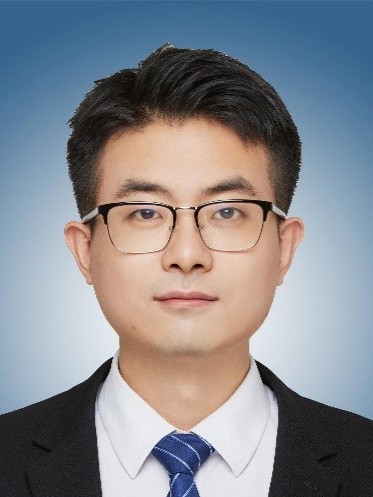
Yukang Cui, Associate Professor
Shenzhen University, China
Biography: Yukang Cui is an Associate Professor at the College of Mechatronics and Control Engineering, Shenzhen University. He is an IEEE Senior Member and a recipient of the Shenzhen University Liyuan Excellent Young Scholar Program. He received his B.Eng. degree from Harbin Institute of Technology and his Ph.D. degree from The University of Hong Kong. He serves as an Honorary Professor in the Department of Mechanical Engineering at The University of Hong Kong, where he teaches MECH3418. His research interests include multi-source fusion perception and 3D Gaussian splatting, multi-UAV collaboration and VLA-based navigation, embodied intelligence and aerial manipulators, and planning and control of high-dynamic unmanned systems. He has led multiple research projects, including the National Natural Science Foundation of China General and Young Scientists projects, Guangdong Natural Science Foundation Young Scholar Enhancement and General projects, Guangdong Department of Education Key and Featured Innovation projects, the Shenzhen-Hong Kong-Macao Science and Technology Program Category C, and strategic research projects of China Aerospace Science and Technology Corporation. He has published more than 40 papers in venues such as IEEE Transactions on Automatic Control, IEEE/ASME Transactions on Mechatronics, and IEEE/RSJ International Conference on Intelligent Robots and Systems. He serves as an Associate Editor for IEEE Transactions on Industrial Cyber-Physical Systems, Journal of The Franklin Institute, and Proceedings of the Institution of Mechanical Engineers, Part I: Journal of Systems and Control Engineering, and has served as Track Chair or Session Chair for international conferences including IEEE IECON and ICCA.
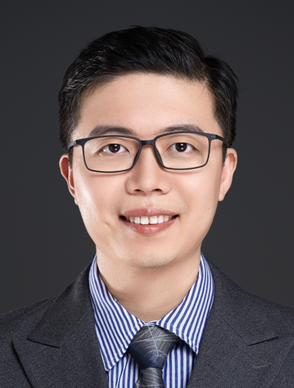
Yunquan Li, Associate Professor
South China University of Technology, China
Biography: Yunquan Li, Associate Professor and Doctoral Supervisor at the Shien-Ming Wu School of Intelligent Engineering, South China University of Technology. He received his Ph.D. in Mechanical Engineering from the University of Hong Kong and completed postdoctoral research at the HKU Faculty of Medicine. His research interests include embodied intelligent robots, dexterous end-effectors, high-sensitivity tactile sensors, bio-inspired robotics, and mobile robotics. He has published 59 papers with over 1,300 Google Scholar citations and an h-index of 19. His work has appeared in IEEE TIE, T-MECH, Soft Robotics, and other leading journals. He holds 4 invention patents. He has led the NSFC project, several provincial and municipal projects, and industry-university collaborations with Midea Group and SIAT. He was selected for the Guangzhou Young Top-Talent Program and is a core member of the Guangzhou Embodied Intelligent Robot Innovation and Entrepreneurship Team. He received the Excellence Award in the Intelligent Robot Championship at the National Disruptive Technology Innovation Competition and the Wiley China Top-Cited Author Award.
Speech Title: Low-Cost and Highly Sensitive Optical Tactile Sensors for Robotic Force Perception
Abstract: This report presents a comprehensive overview of our recent research on low-cost, highly sensitive flexible optical tactile sensors for intelligent robots. The presentation will first introduce the background and significance of tactile perception in human-robot interaction and complex operations. It will then cover two primary technical approaches developed in our lab: 1) A particle-jamming gripper integrated with a stretchable optical waveguide skin for large-area shape-adaptive grasping and slip detection; 2) A compact optical blocking structure-based tactile sensor for high-sensitivity 1D/3D force detection. The report will also discuss how machine learning algorithms (such as GRU and SVM) are utilized to achieve accurate 3D force decoupling, contact position recognition, and grasping posture classification. Finally, practical applications in robotic arms, including adaptive grasping, hardness/texture detection, and multi-axis teleoperation, will be demonstrated.
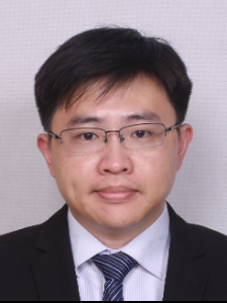
Zhifeng Huang, Associate Professor
Guangdong University of Technology, China
Biography: Dr. Zhifeng Huang is an Associate Professor, Doctoral Supervisor, and Deputy Director of the Department of Automatic Control at the School of Automation, Guangdong University of Technology, and also a Visiting Researcher at the The Research into Artifacts, Center for Engineering of the University of Tokyo; he received his B.Eng. from South China University of Technology (2007), M.Eng. from Harbin Institute of Technology (2010), and Ph.D. from the University of Tokyo (2014). His research focuses on mechanism design and control theory for humanoid robots and applications of mobile manipulators, and he has published over 20 SCI/EI-indexed papers in leading journals and conferences such as IEEE Transactions on Mechatronics, IEEE Transactions on Learning Technologies, IEEE Robotics and Automation Letters, IROS, and ICRA, along with 12 authorized invention patents. As principal investigator, he has secured one National Natural Science Foundation project, three Guangdong Provincial Natural Science Foundation projects, one key R&D project for central state-owned enterprises (¥1.55 million), and ten industry collaborative projects, with cumulative research funding exceeding ¥3 million RMB. In 2018, he was honored with the title of "Innovation Hero" by the Guangzhou Municipal Publicity Department. His notable achievements include developing in 2017 the world's first bipedal robot based on a ducted‑fan propulsion system for large‑scale obstacle crossing, which set a world record among humanoid robots with a stepping distance reaching 147% of its own leg length; and in 2021, he designed the world's first flying bipedal robot using vector‑thrust control and successfully demonstrated controllable take‑off. This series of research has been widely reported by both domestic and international media, including IEEE Spectrum, the Daily Mail (UK), Guangdong Television, China Daily, Southern Daily, and China News Service.